
The Taiping Rebellion
A 14-year civil war that devastated Qing China.

Unknown. Probably commisioned by Tianjing merchants as a souvenir to Prince Sang · Public domain
Led by Hong Xiuquan, an ethnic Hakka who proclaimed himself the younger brother of Jesus Christ, the conflict sought religious conversion, political overthrow of the Qing, and a complete transformation of state and social order.
- Conflict
- Taiping Rebellion
- Location
- Mid- and lower Yangtze valley, central and southern China
- Leader
- Hong Xiuquan
- Opponent
- Qing dynasty
- Outcome
- Qing victory, but at great cost to economic and political viability
Lore & Background
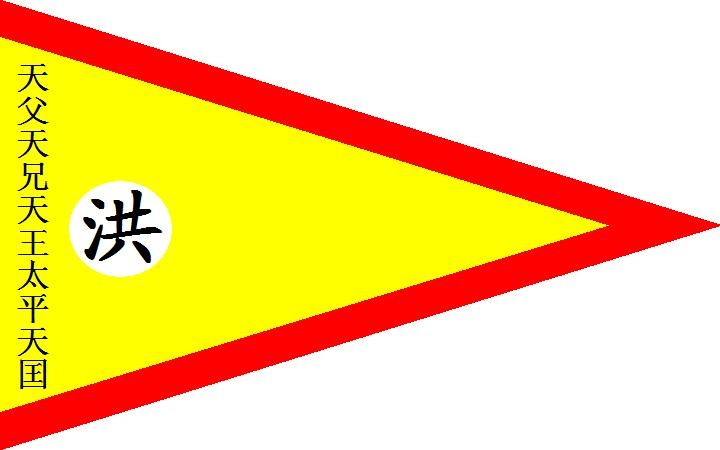
The Taiping Rebellion was ignited by Hong Xiuquan, a Hakka from Guangdong who, after failing the imperial examinations multiple times and experiencing visions, came to believe he was the younger brother of Jesus Christ. The Taiping Heavenly Kingdom, with its capital at Nanjing (renamed Tianjing), at its peak ruled nearly 30 million people and controlled significant portions of southern China.
Reader's Guide
The Taiping Rebellion was the largest war in China since the Ming–Qing transition and the deadliest civil war in human history, comparable to World War I in terms of deaths. It prompted the Qing government's initially successful Self-Strengthening Movement, but the conflict, along with the Opium Wars and Boxer Rebellion, weakened the Qing dynasty's grasp on central China. The rebellion's legacy is debated: some view it as a nationalist or protocommunist movement, while others emphasize its extreme brutality on both sides, including massacres of Manchus by Taiping soldiers and Qing massacres of civilians in Nanjing.
Did You Know?
- The Taiping Heavenly Kingdom renamed Nanjing to Tianjing, meaning 'heavenly capital'.
- Thirty million people fled the conquered regions during the war.
- The Qing referred to the conflict as a 'period of chaos' (luàn) to avoid lending credibility to the Taiping.
Seeds of a New Faith
The Taiping movement sprang from the personal crisis of Hong Xiuquan, a Hakka man from Guangzhou who kept failing the imperial civil-service examinations. After a nervous breakdown, he told friends and family of a dream in which a golden-haired, bearded figure and a younger man he addressed as 'Elder Brother' greeted him, and in which Confucius was punished by a celestial father for leading people astray. He worked another six years as a tutor before his brother convinced him to examine Liang Fa's nine-part, five-hundred-page tract, Good Words to Admonish the Age. Reading it, Hong reinterpreted his old vision in Christian symbolism: he was Jesus's younger brother, and God the Father had spoken directly to him. Yang Xiuqing, a former charcoal and firewood salesman, joined the group claiming to voice the Supreme Emperor. One historian calls the resulting belief system 'Taiping Christianity,' a dynamic new Chinese religion that Hong presented not as a foreign import but as a restoration of the ancient classical faith in Shangdi. What started as a small sect suppressing local bandits and pirates in the late 1840s was pushed by Qing persecution into guerrilla activity and, eventually, full-scale civil war.
From Uprising to Empire
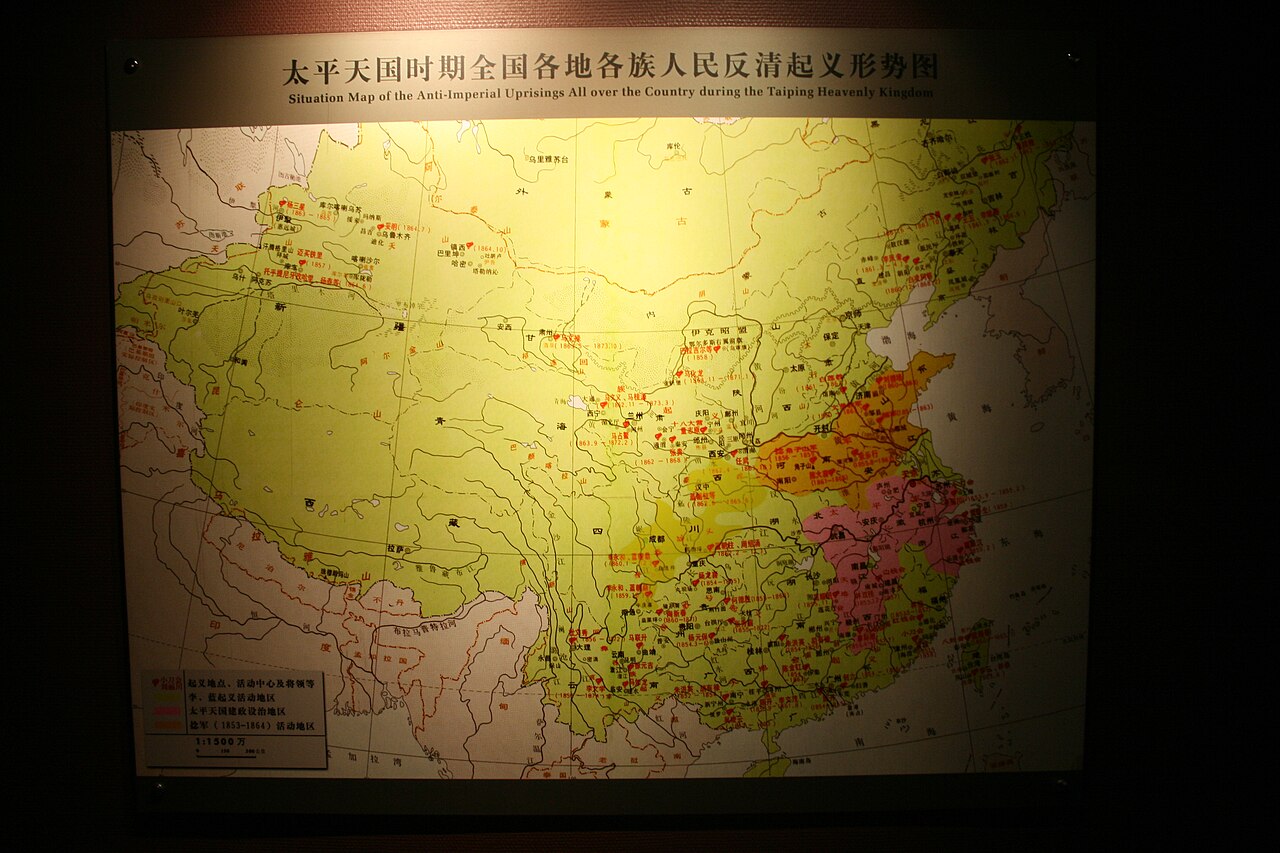
By February, a ten-thousand-strong rebel army had routed a smaller Qing force, marking the transition from localized revolt to open war. At its peak, the Heavenly Kingdom held sway over a swath of southern China centered on the fertile Yangtze River Valley, an area home to nearly thirty million people. Control of the river gave the rebels a reliable supply line to their capital and launched them on ambitious campaigns: armies pushed west into the upper Yangtze reaches and north toward Beijing, the Qing capital. The bid for Beijing failed, but the kingdom's geographic reach demonstrated that a theocratic insurgency could challenge a two-century-old dynasty across a vast and populous region.
A Theocracy in the Name of Heaven
The Heavenly Kingdom of Great Peace was structured as a theocratic monarchy in which religious authority and political power were inseparable. Hong Xiuquan, a convert to Protestant Christianity, styled himself the younger brother of Jesus Christ and the second son of Heavenly Father and the Heavenly Mother—though scholars remain uncertain whether he intended this claim literally or as metaphor. The state replaced traditional Chinese cults with the Bài Shàngdì Huì, the Supreme Emperor Worshipping Society, and announced sweeping social reforms. The very name 'Great Peace' (taiping) drew on a utopian ideal that Han-dynasty Confucian scholars had tied to wise rulers, cosmic harmony, and the satisfaction of the people; in Marxist historiography the rebellion is sometimes read as a proto-communist uprising. His claim that a celestial vision instructed him to exterminate all Manchu 'demons' led to horrific violence: when Nanjing fell, Taiping rebels killed the Manchu men first, then burned Manchu women and children to ash, a rampage that killed forty thousand. The theocratic state thus fused messianic ideology with ethnic hatred in ways that shaped both its governance and its brutality.
A Century of Humiliation and a Fourteen-Year War
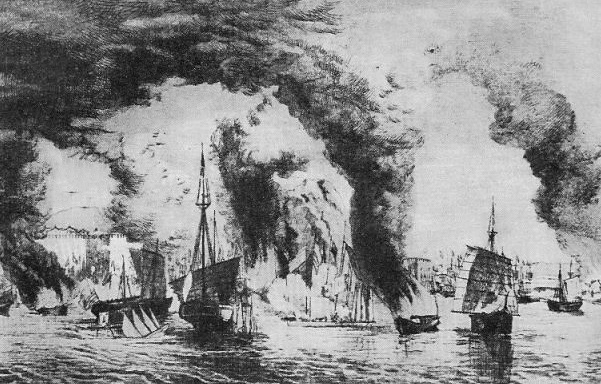
The Taiping Rebellion did not erupt in a vacuum. Throughout the nineteenth century, Qing China endured famines, natural disasters, economic collapse, and humiliating defeats at the hands of foreign powers—a period later labeled the 'century of humiliation.' Farmers were crushed under heavy taxation and soaring rents; peasants abandoned their land in droves. The Qing military had just suffered a devastating loss in the First Opium War, and the national economy was battered by a trade imbalance driven by the massive illicit importation of opium. Banditry proliferated, secret societies and self-defense militias multiplied, and small-scale warfare became endemic. Into this chaos, Protestant missionaries working out of Macao, Pazhou, and Guangzhou spread their message, their household staff and printers adapting the gospel for Chinese audiences and frequenting the prefectural and provincial examination halls where ambitious scholars competed for imperial office. It was in this ferment that Hong Xiuquan's vision took root. The resulting fourteen-year war saw Taiping territories besieged by Qing forces for most of its duration. The rebellion was ultimately crushed, but not by Qing arms alone: French and British forces lent their aid in the final campaigns, marking a grim intersection of internal revolt and foreign intervention.
Gallery
Frequently Asked Questions
What is The Taiping Rebellion?
It was a massive civil war in late imperial China in which rebel forces of the Taiping Heavenly Kingdom fought to overthrow the Qing dynasty government. The conflict was centered on the mid- and lower Yangtze valley region and represented a full attempt to replace the existing state, religious, and social order.
Who led The Taiping Rebellion?
Hong Xiuquan, an ethnic Hakka man, headed the rebellion after proclaiming himself the younger brother of Jesus Christ. Under his leadership the Taiping Heavenly Kingdom pursued mass religious conversion, the political overthrow of the Qing, and a complete restructuring of Chinese society.
Why is The Taiping Rebellion important?
It ranks among the bloodiest wars ever fought and fundamentally destabilized the Qing dynasty's hold over central and southern China. The rebellion exposed the regime's military and administrative weaknesses, accelerating the internal reforms and foreign entanglements that would define the rest of the nineteenth century.
More in Great Collapses 1-20
Spotted an error? Know more?
This is a living reference — every entry is fact-audited, and reader corrections feed straight into our audit queue. Suggest an edit · See this site's audit record