
The Bronze Age Collapse
A period of widespread societal collapse in the late Bronze Age.

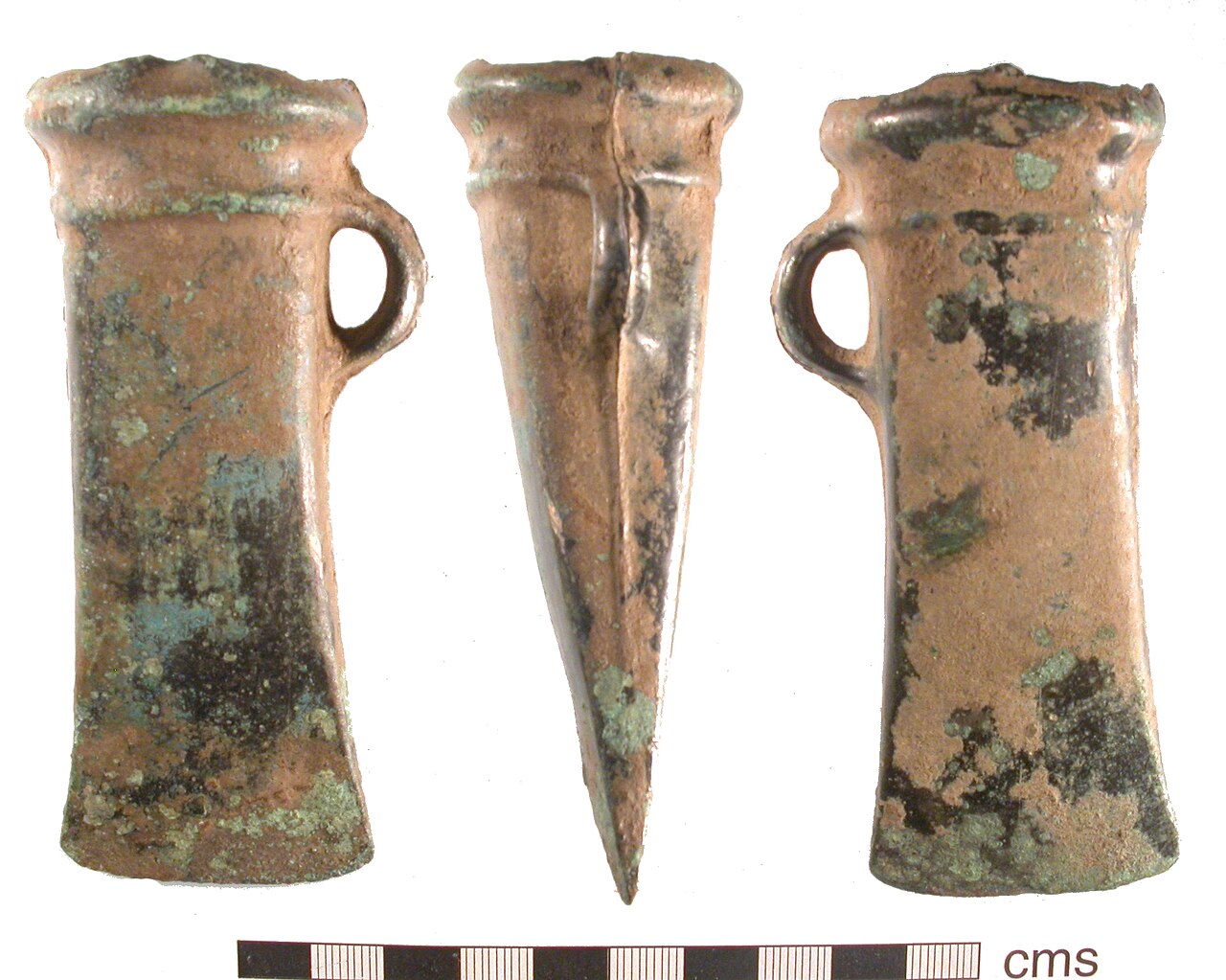
Colchester Museums, Laura McLean, 2008-08-12 14:28:42 · CC BY-SA 4.0
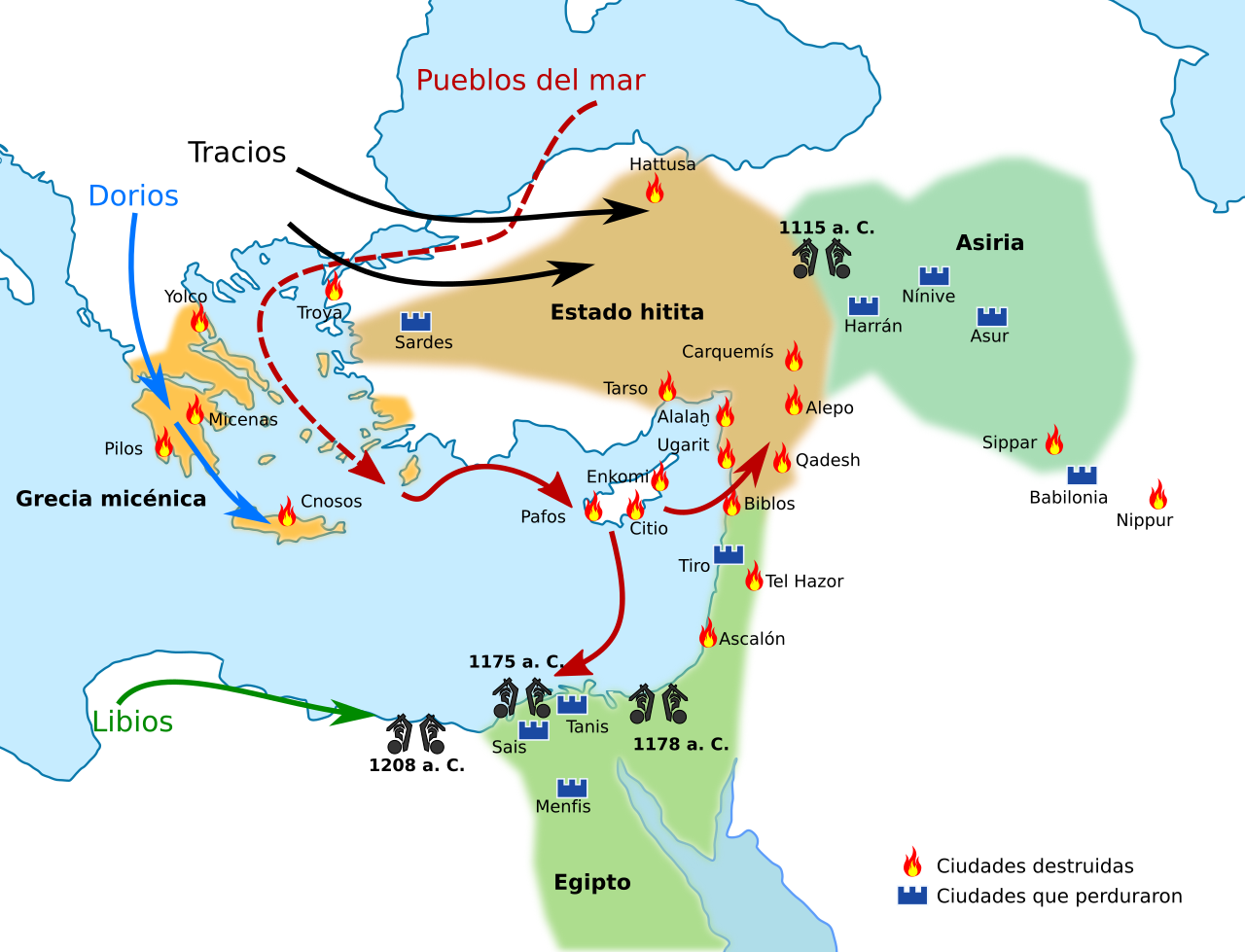
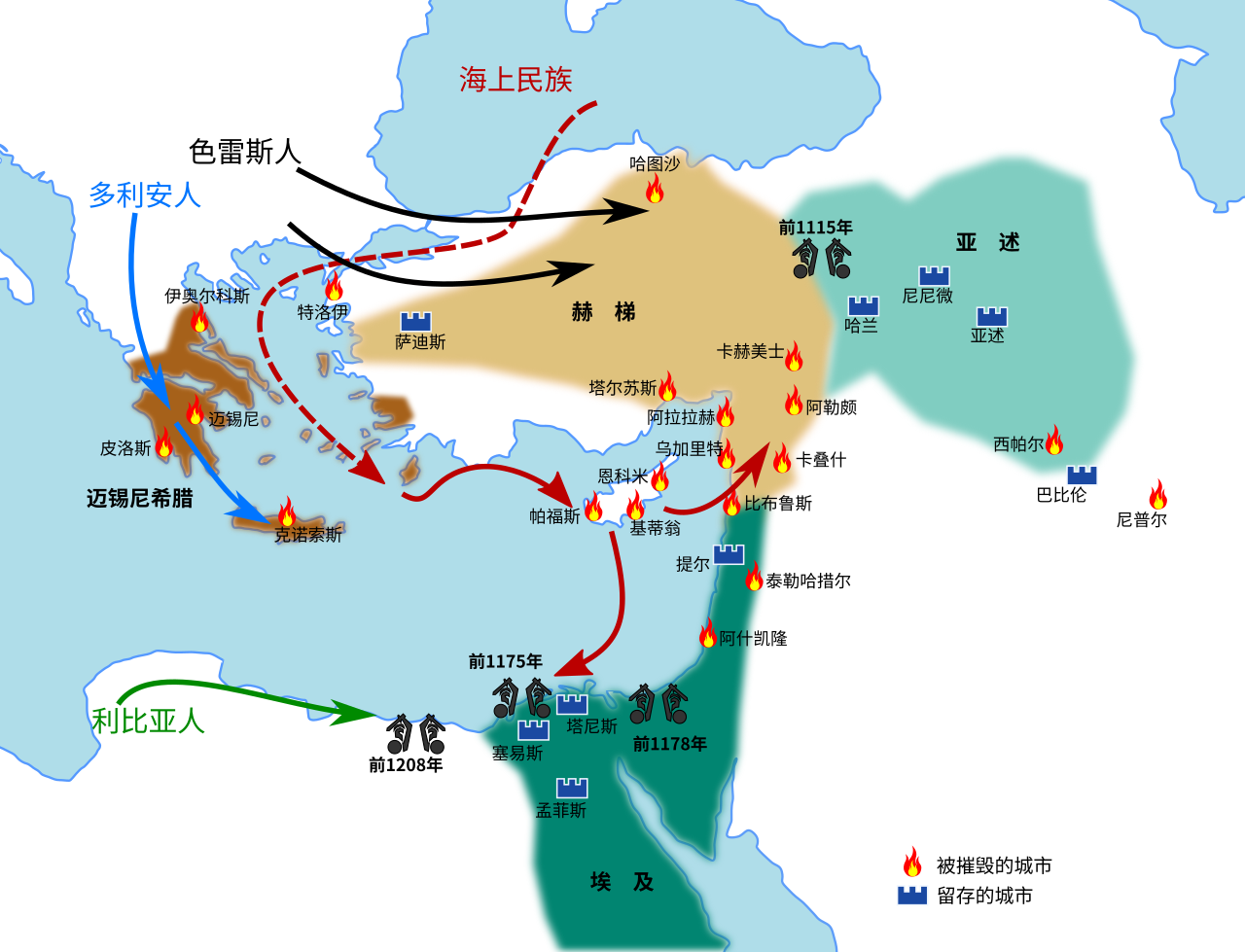
The Late Bronze Age collapse was a period of societal collapse in the Mediterranean basin during the late 13th to early 12th century BC. It is thought to have affected much of the Eastern Mediterranean and Near East, in particular Egypt, Anatolia, the Aegean, and the Balkans. The collapse was sudden, violent, and culturally disruptive for many Bronze Age civilizations, creating a sharp material decline for the region's previously existing powers. The palace economy of Mycenaean Greece, the Aegean region, and Anatolia disintegrated, transforming into the small isolated village cultures of the Greek Dark Ages, which lasted from c.
- affected_civilizations
- Egypt, Anatolia, Aegean, Balkans
Lore & Background
The deterioration of these governments interrupted trade routes and led to severely reduced literacy rates. Initially, historians believed that almost every city between Pylos and Gaza was violently destroyed, with Robert Drews claiming that within a period of forty to fifty years at the end of the thirteenth and beginning of the twelfth century, almost every significant city in the eastern Mediterranean world was destroyed. Ann Killebrew has shown that cities such as Jerusalem were small and unfortified during the Late Bronze and Iron Age I and IIA/B Ages, contrary to earlier assumptions.
Reader's Guide
The Late Bronze Age collapse marks a pivotal transition in ancient history, ending the palace economies and centralized states of the Bronze Age and leading into the Greek Dark Ages and eventually the Iron Age. Its significance lies in the dramatic cultural and material decline of major powers such as the Hittite Empire and Mycenaean Greece, while states like the Middle Assyrian Empire and New Kingdom of Egypt survived in weakened forms. The collapse also allowed other cultures, such as the Phoenicians, to gain increased autonomy. Competing theories for its cause—including climate change, invasions by the Sea Peoples, and economic disruptions—remain debated. Scholarship in the late 20th and early 21st century has introduced views that the collapse was more limited in scale and scope than previously thought, with many supposed destructions being false. The event's legacy includes the gradual changes in metallurgic technology that led to the subsequent Iron Age across Europe, Asia, and Africa during the 1st millennium BC.
Did You Know?
- The Hittite capital of Hattusa was burned at an unknown date in this period, though it may have been abandoned at that point.
The Sudden Unraveling of a Connected World
The Bronze Age Collapse struck the Eastern Mediterranean and Near East between the late thirteenth and early twelfth centuries BC, shattering civilizations that had flourished for centuries. Egypt, Anatolia, the Aegean, eastern Libya, and the Balkans all bore the brunt of what was, by all accounts, a sudden and violent upheaval. The cultural disruption was profound: societies that had sustained monumental architecture, sophisticated metallurgy, and widespread literacy saw a sharp material decline that upended the existing power structures. What made the event so devastating was not merely the destruction itself but the speed with which interconnected systems failed. Trade networks that had carried copper, timber, pottery, and agricultural goods across the basin fractured almost overnight. Diplomatic relationships that had bound great powers together dissolved, and the intricate web of dependencies that held these civilizations in equilibrium snapped under the weight of cascading failures. For the peoples living through it, the world they had known simply ceased to exist, replaced by a landscape of ruin and uncertainty that would take generations to recover from.
The Fragility of the Palace Economy
The palace economy concentrated wealth within a bureaucratic hierarchy controlled by a sovereign, who then redistributed resources according to political priorities. This system, while producing impressive achievements in architecture, metallurgy, and literacy, inherently served the interests of a narrow elite. The great powers of Egypt, the Hittite Empire, Mesopotamia, and Mycenaean Greece all relied on this structure, and their progressive deepening of trade and diplomatic ties created a tightly woven network of mutual dependence. Copper, timber, pottery, and foodstuffs flowed along routes that connected these states, making each one vulnerable to disruptions occurring far from its borders. The inflexibility of the palace system meant that when disturbances struck—whether through famine, plague, or military conflict—the cascading effects rippled outward with devastating speed. A single point of failure in one region could trigger a chain of failures across the entire basin, leaving no buffer for the populations who depended on the system for their daily survival.
Rewriting the Record: The Scholarly Revision
For over a century, the dominant narrative of the Bronze Age Collapse painted a picture of near-total annihilation. Robert Drews famously argued that within forty to fifty years at the close of the thirteenth century, virtually every significant city in the eastern Mediterranean was destroyed, many never to be inhabited again. Yet recent archaeological scrutiny has dramatically narrowed the scope of the catastrophe. Of Drews's 60 claimed destructions, 31 proved to be false, including well-known sites like Athens, Knossos, Tyre, and Sidon. Ann Killebrew further demonstrated that settlements such as Jerusalem, while significant in earlier and later periods, were small and unfortified during the Late Bronze Age. The consensus has shifted: the collapse was real but far more limited in geographic reach and intensity than the old narrative suggested.
From Palaces to Villages: The Long Aftermath
The transformation that followed the collapse was neither uniform nor instantaneous. The Hittite capital of Hattusa was burned and likely abandoned, while at Karaoğlan near modern Ankara, the dead were left unburied in the rubble. Some settlements like Troy were quickly rebuilt; others, such as Kaymakçı, were never reoccupied. In Mesopotamia and Egypt, the Middle Assyrian Empire and the New Kingdom of Egypt survived but in markedly weakened forms. Meanwhile, the Phoenicians, freed from the military reach of both Egyptian and Assyrian powers, experienced a notable increase in autonomy and regional influence. The deterioration of centralized governments also severed trade routes and drove literacy rates sharply downward across the region. Over the following centuries, gradual shifts in metallurgical practice gave way to the Iron Age, and new populations such as the Phrygians appeared in Anatolia, reshaping the demographic landscape for good.
Gallery
Frequently Asked Questions
What is The Bronze Age Collapse?
It refers to the rapid disintegration of major palace-centered civilizations across the Eastern Mediterranean between the late 13th and early 12th centuries BC. The event shattered established political and economic structures, plunging the region into what scholars often call a Dark Age.
Which civilizations were hit hardest by The Bronze Age Collapse?
The Hittite Empire, Mycenaean Greece, and Levantine city-states such as Ugarit were among the most severely affected. Egypt survived but lost significant territory and influence, while Anatolia and the Aegean saw their palace economies dissolve into small, isolated village communities.
What caused The Bronze Age Collapse?
No single explanation is universally accepted; most scholars point to a convergence of prolonged drought, climate shifts, economic disruption, and military pressure from groups like the Sea Peoples. Volcanic activity, disease, and changes in warfare technology are also cited as contributing factors in the ongoing scholarly debate.
How does The Bronze Age Collapse's story end?
There is no single dramatic finale; rather, the region gradually reorganized over roughly a century as new political structures emerged from the rubble. Phoenician trade networks, early Iron Age societies, and a reconstituted Egypt eventually filled the vacuum left by the fallen palatial states.
Why is The Bronze Age Collapse important in the broader history timeline?
It marks one of the most dramatic resets of complex civilization in the ancient world, wiping out writing systems, long-distance trade, and centralized governance across a wide area. The institutional memory and specialized knowledge lost during this period shaped the trajectory of the Mediterranean for centuries afterward.
More in Great Collapses 1-20
Spotted an error? Know more?
This is a living reference — every entry is fact-audited, and reader corrections feed straight into our audit queue. Suggest an edit · See this site's audit record