
The Sack of Rome, 410 AD

Fustel de Coulanges · Public domain
Nevertheless, the city of Rome retained a paramount position as 'the eternal city' and a spiritual center of the Empire.
- event
- Sack of Rome
- perpetrator
- Visigoths under King Alaric
- location
- Rome
Lore & Background
A power struggle between Stilicho and Rufinus allowed Alaric to pillage Greece, including Piraeus, Corinth, Argos, and Sparta.
Reader's Guide
The shock was profound: St. Jerome, writing from Bethlehem, noted that 'the city which had taken the whole world was itself taken.' The sack marked a turning point in the relationship between the Roman world and the Germanic peoples, highlighting the empire's inability to control or integrate the Visigoths, who had been allies and enemies in turn. The event also underscored the political fragmentation of the empire after Theodosius's death, with power struggles between East and West enabling Alaric's campaigns. While Rome was no longer the administrative capital, its spiritual and symbolic importance made its fall a lasting symbol of the empire's transformation and eventual collapse in the West.
Did You Know?
- St. Jerome, living in Bethlehem, wrote about the sack: 'the city which had taken the whole world was itself taken'.
The Shock of an Eternal City Falling
The shock rippled outward in every direction, striking allies and adversaries of the empire with equal force. In Bethlehem, the scholar St. Jerome captured the magnitude of the moment with a single devastating observation: the city that had once taken in the whole world had itself been taken.
The Gothic-Roman Entanglement
The relationship between the Visigoths and Rome was neither simple conquest nor clean subjugation but a tangled web of treaty, obligation, and resentment stretching back to the late fourth century. Alaric was granted the title comes for his bravery, yet he seethed at what he perceived as a deliberate Roman strategy to weaken the Goths by making them absorb the heaviest fighting, and at his exclusion from higher imperial office.
Alaric's War and the Empire's Fractured Response
His two young successors, Honorius and Arcadius, required guardians, and a bitter struggle erupted between the Western general Stilicho and the Eastern praetorian prefect Rufinus, each claiming authority over both empires. Rufinus reportedly negotiated Alaric's withdrawal from Constantinople, perhaps by offering him lands in Thessaly. Stilicho then marched east with a combined army and besieged Alaric behind a wagon fortification on the plain of Larissa for several months, yet never committed to a decisive battle. Arcadius, under pressure from Stilicho's enemies, ordered him to withdraw. Freed from Stilicho's pressure, Alaric pillaged much of Greece—Piraeus, Corinth, Argos, and Sparta fell to the sword, while Athens escaped by paying a ransom.
Four Centuries of Collision
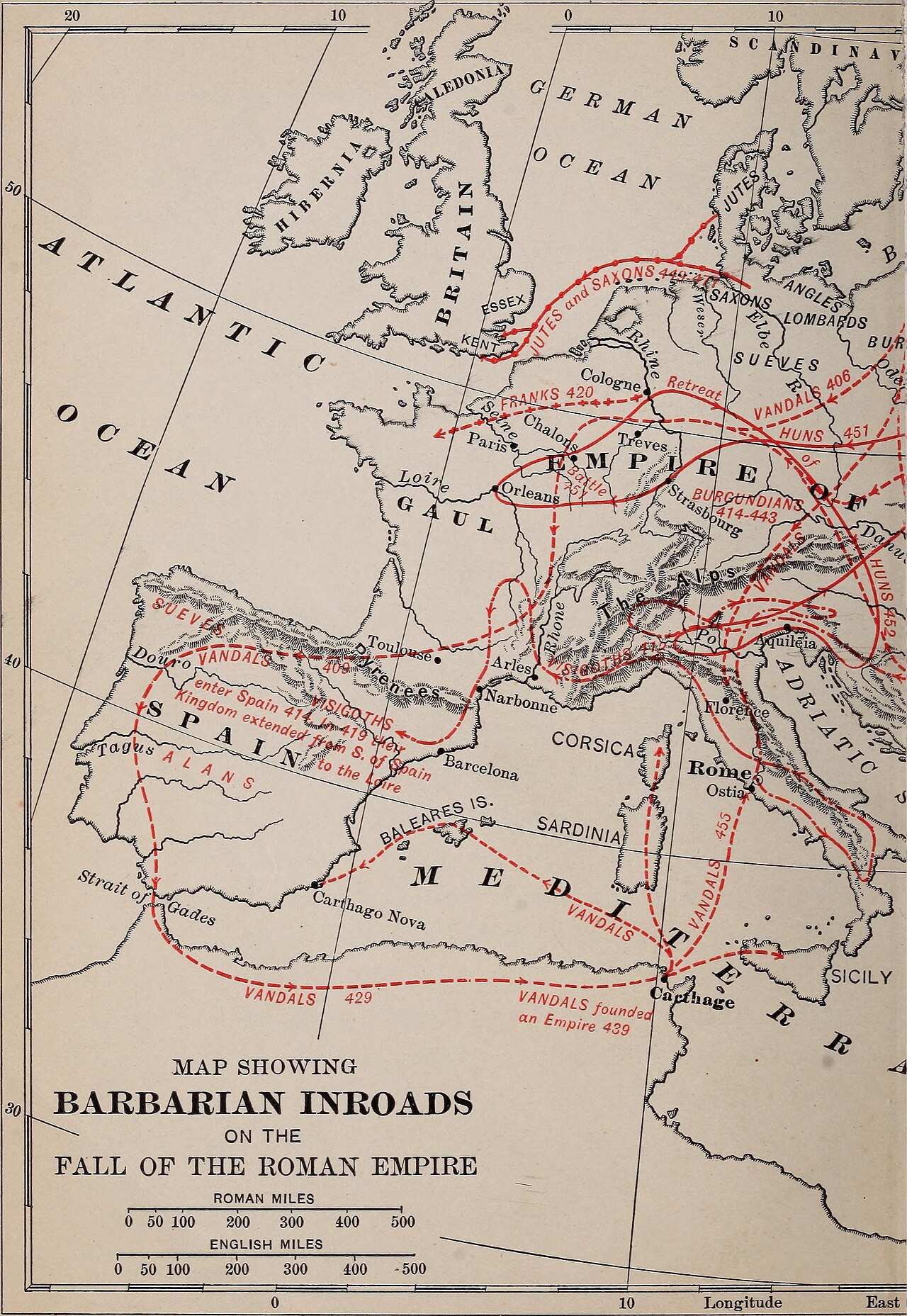
Over four centuries of contact with the Roman Empire, the Germanic tribes had undergone profound transformation in technology, social organization, and economic production. From the first through the fourth centuries, their populations grew, their tribal confederations consolidated, and their capacity for organized warfare expanded to the point where they could genuinely challenge Roman armies. What began as a request for refuge curdled into open revolt when starvation, crushing taxes, Roman hostility, and governmental corruption turned the Goths against their hosts.
Gallery

Frequently Asked Questions
Who is The Sack of Rome, 410 AD?
It is the title given to the three-day plundering of the city of Rome by the Visigothic host under King Alaric, catalogued as one of the landmark entries in the Great Collapses 1-20 series.
How does The Sack of Rome, 410 AD's story end?
Alaric's Visigoths looted the city for roughly three days before withdrawing, leaving Rome wounded but standing. The aftermath sent a shockwave through both allies and enemies of the Empire, reshaping how the ancient world perceived imperial invincibility.
Why is The Sack of Rome, 410 AD important?
It marked the first time in nearly eight hundred years that a foreign army had breached Rome's walls, making it the defining psychological blow of the Western Empire's collapse. The event became a cultural watershed that reframed the fragility of Roman authority for generations of contemporaries.
More in Great Collapses 1-20
Spotted an error? Know more?
This is a living reference — every entry is fact-audited, and reader corrections feed straight into our audit queue. Suggest an edit · See this site's audit record